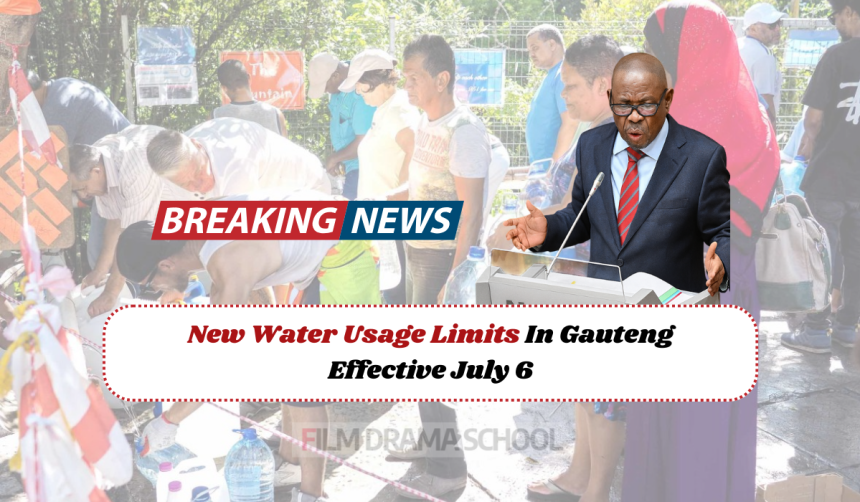
New Water Usage Limits In Gauteng Effective July 6. As Gauteng faces one of its most severe water shortages in decades, the government has implemented New Water Usage Limits starting July 6, 2025. This urgent measure comes amid dangerously low dam levels, persistent dry conditions, and increased water consumption across major municipalities including Johannesburg, Tshwane, and Ekurhuleni.
With Gauteng being the most populous and economically vital province in South Africa, these restrictions are not just about household inconvenience they’re about preventing a total water supply collapse that could impact hospitals, schools, and essential services.
Why Are the New Water Usage Limits Necessary?

According to Rand Water and the Department of Water and Sanitation (DWS), Gauteng has entered a “critical stage intervention.” Due to limited rainfall and excessive demand, water systems are under immense pressure. The New Water Usage Limits aim to reduce daily residential water usage by at least 35%, while also applying strict controls to commercial and public institutions.
DWS spokesperson Wisane Mavasa stated in a recent briefing:
“Public cooperation is now mandatory. Enforcement measures will be implemented to ensure compliance.”
What the New Water Usage Limits Mean for You
From July 6, 2025, every household in Gauteng is expected to adhere to new water-saving rules. These measures are mandatory and monitored through digital meters and municipal audits.
Residential Restrictions
| Guideline | Description |
|---|---|
| Water Usage Reduction | Minimum 35% reduction daily |
| Irrigation Ban | No garden watering between 6 AM – 6 PM |
| Car Washing | Hosepipes not allowed |
| Swimming Pools | Top-ups only once per week |
| Boreholes | Must be registered with local municipalities |
| Greywater Use | Recommended for toilet flushing |
| Shower Time | 2-minute showers encouraged |
Commercial & Public Sector Limits
| Sector | Restriction |
|---|---|
| Car Washes | Must install recycling systems |
| Restaurants | Water served only on request |
| Malls | Reduce indoor usage by 30% |
| Schools & Hospitals | Must submit water-saving plans |
| Sports Facilities | Irrigation only between 9 PM – 5 AM |
| Office Parks | Suspend water-cooling & irrigation systems |
Areas Most Affected by the New Water Usage Limits
Certain locations are already experiencing low water pressure, intermittent supply, or scheduled outages. These areas will face tighter monitoring and harsher penalties for violations.

| Municipality | Areas | Water Status | Notes |
|---|---|---|---|
| Johannesburg | Soweto, Midrand | Low Pressure | Reduced pipe supply |
| Tshwane | Mamelodi, Centurion | Intermittent Cuts | Bulk pipeline overload |
| Ekurhuleni | Benoni, Vosloorus | Scheduled Outages | Emergency rotations |
| Mogale City | Kagiso, Krugersdorp | Low Pressure | High daily demand |
| Emfuleni | Vanderbijl, Sebokeng | Cut-offs | Reservoirs nearly empty |
| Randfontein | All areas | Low Pressure | Pump station shutdown |
| Springs | CBD, Suburbs | 8 Hours/Day Flow | Rotational supply |
| Diepsloot | Whole Area | Tanker Only | Operates every 2 days |
How to Reduce Daily Water Usage at Home
Meeting the 35% reduction may seem daunting, but small changes can lead to big savings.
- Switch from baths to 2-minute showers.
- Use a bucket instead of a hose for outdoor cleaning.
- Turn off taps when brushing teeth or shaving.
- Reuse greywater from laundry for flushing.
- Fix leaks immediately.
- Run dishwashers and washing machines only on full loads.
- Use hand sanitizers where applicable.
Smart Water-Saving Devices You Should Consider

Upgrading to efficient appliances can significantly reduce your water footprint.
| Device | Benefit |
|---|---|
| Low-flow Showerhead | Saves up to 50% of water |
| Tap Aerators | Maintains pressure while reducing flow |
| Dual-Flush Toilets | Saves 3–6 liters per flush |
| Water-Efficient Dishwashers | Up to 15 liters less per wash |
| Smart Leak Detectors | Alerts you to water loss |
Government Penalties for Non-Compliance
The New Water Usage Limits are legally enforceable. Violations will incur stiff fines and, in severe cases, criminal charges.
Penalty Structure
| Offense | Penalty | Authority |
|---|---|---|
| Exceeding Household Limit | R1,500 per offense | Municipal Unit |
| Illegal Borehole Use | R5,000 + disconnection | DWS |
| Commercial Overuse | R10,000/day | Water Inspectors |
| Meter Tampering | Criminal charges | SAPS & Municipal |
| Unauthorized Irrigation | Warning → Fine → Cut-off | Ward Councils |
Ongoing and Planned Water Infrastructure Projects

To ensure long-term stability, several major water projects are underway and expected to finish between 2025 and 2027.
Infrastructure Plans & Impact
| Project | Status | Completion | Impact |
|---|---|---|---|
| Rand Water Pipeline Upgrade | 45% Complete | Mar 2026 | High |
| Borehole Rollout | Phase 1 Done | Oct 2025 | Medium |
| Rain Tank Subsidy | Funding Approved | Aug 2025 | Medium |
| Water Reuse Pilot | Testing Stage | July 2026 | High |
| School Plumbing Retrofits | Ongoing | Dec 2025 | Medium |
How to Track Your Water Usage
Staying informed is critical to avoid fines and contribute to the province’s conservation goals.
- Register on the Rand Water App to track usage.
- Install prepaid meters to monitor and control daily consumption.
- Join community WhatsApp groups for alerts.
- Report leaks or illegal connections via 24/7 hotlines.
- Use SMS alerts from JohannesburgWater.
FAQs About New Water Usage Limits
Can I water my garden at night under the new restrictions?
Yes, but only between 6 PM and 6 AM. Garden irrigation during the day is strictly prohibited under the New Water Usage Limits.
What should I do if I suspect a neighbor is violating the rules?
You can report water misuse to your municipal enforcement unit or via the Rand Water 24-hour hotline. All reports are treated confidentially.
Are borehole users also affected by the new restrictions?
Yes. All borehole usage must be registered with the local municipality. Unauthorized boreholes may be fined R5,000 and disconnected
Conclusion
The New Water Usage Limits are not a suggestion they are a survival strategy. With water infrastructure under immense strain and little rainfall in sight, immediate action is the only way forward. Whether you’re a homeowner, business owner, or institutional manager, your cooperation will make the difference.